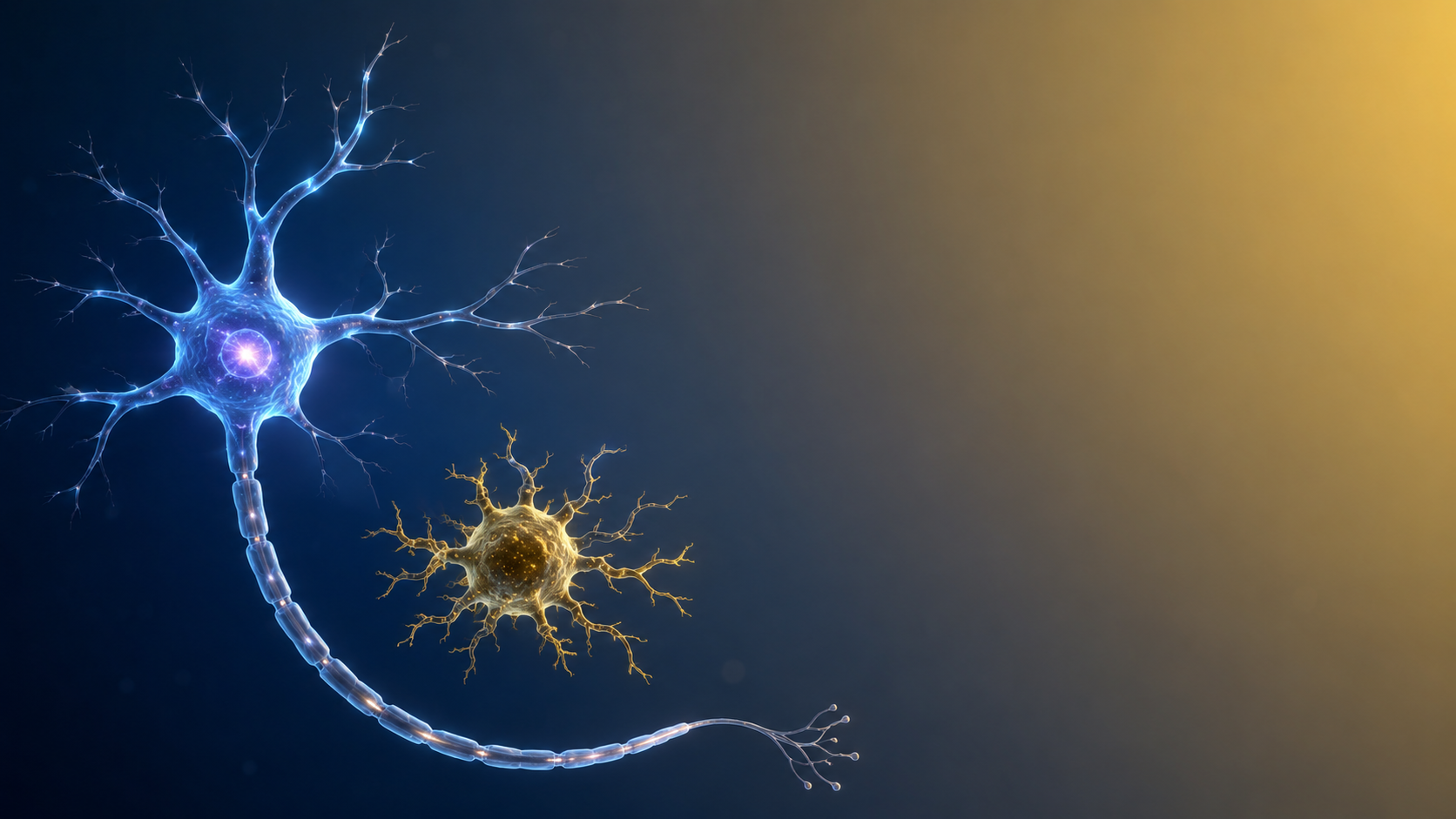

A Familiar Problem: Brain Cells That Stop Cleaning Up
As the brain ages, one of its most important housekeeping systems starts to break down. Microglia — the brain’s resident immune cells — normally patrol for damaged synapses and cellular debris, keeping the neural environment tidy. But aging tends to push microglia into a chronically over-activated, inflammatory state, and their cleanup efficiency drops. This shift is increasingly seen as a contributor to age-related cognitive decline and neurodegenerative disease.
The Study Design
A team at the Icahn School of Medicine at Mount Sinai, led by first author Brittany M. Hemmer and corresponding author Joseph M. Castellano, investigated a protein called TIMP2. The same lab had previously identified TIMP2, in a 2017 Nature paper, as a factor in young donor (umbilical cord) plasma capable of restoring memory function in aged mice.
For this new study, published in Nature Communications, the researchers combined several mouse models: wild-type and TIMP2 knockout mice, plus mice with TIMP2 selectively deleted in microglia or in neurons. They also tested treatment in aged (20-month-old) mice, injecting TIMP2 systemically (50 μg/kg) for about two and a half weeks.
The Result
“TIMP2 can restore several aspects of microglial function that decline with age by supporting debris-clearance capacity and limiting maladaptive responses.”
Mice lacking TIMP2 showed microglia with upregulated inflammatory gene pathways and a significant decline in their ability to clear myelin debris. Treating aged mice with TIMP2 reversed this pattern: overactivated microglia (IBA1+CD68+) decreased, debris-clearing capacity was restored, and single-cell RNA sequencing showed an increase in a specific microglial subcluster associated with healthier function. Inflammatory proteins in the brain’s interstitial fluid dropped, and — at the same dose — learning and memory measures improved.
Why This Isn’t the Final Word
It’s worth being precise about what this study does and doesn’t show. This is mouse research: the biology of mouse microglia resembles, but isn’t identical to, human microglia, and the aged-mouse brain is a far simpler system than an aging human brain shaped by decades of individual genetics, lifestyle, and disease exposure. The exact mechanism by which TIMP2 influences microglial behavior — direct receptor signaling versus an indirect pathway — remains unresolved. There’s no data yet on long-term safety, optimal human dosing, or durability of effect beyond the roughly 2.5-week treatment window tested, and no one yet knows whether repeated or chronic treatment would keep producing benefit or eventually lose effect. And critically, no human trials have been run. This is basic, preclinical science — an important mechanistic clue, not a validated therapy, and it should be reported and read that way.
What This Means for Readers
For anyone following brain-health or dementia research, this study is a useful data point in a growing body of work connecting microglial dysfunction to brain aging — alongside genetic findings like TREM2’s link to Alzheimer’s risk. It reinforces that neuroinflammation, not just protein plaques, is a meaningful target for future research, and it adds mechanistic weight to a research program this same lab has pursued since 2017, when TIMP2 was first flagged as a “youth factor” in cord plasma. That continuity matters: this isn’t an isolated, one-off finding, but a second study from the same group narrowing in on how and where TIMP2 actually works in the aging brain. It also stands apart from most current Alzheimer’s drug development, which has focused on clearing amyloid plaque directly; this line of research instead asks whether the brain’s own immune cells can be nudged back toward healthier behavior.
That said, there is no TIMP2 supplement, drug, or protocol available today, and none should be sought out or purchased under that name — this is laboratory research, still years away, at best, from anything resembling a clinical product, and self-administering unapproved compounds carries real risk with no established benefit. The practical, evidence-backed steps for supporting brain health remain unchanged in the meantime: regular aerobic and resistance exercise, sufficient sleep, a balanced diet, and management of cardiovascular risk factors such as blood pressure and blood sugar, all of which have consistent human evidence behind them for lowering chronic inflammation and supporting long-term cognitive health. Anyone with concerns about memory or cognitive changes should speak with a physician rather than waiting on findings like these.
References
Hemmer BM, et al. Youth-associated protein TIMP2 regulates microglial state and function in healthy and aged mice. Nature Communications. 2026;17:8173. doi:10.1038/s41467-026-74906-z
Castellano JM, et al. Human umbilical cord plasma proteins revitalize hippocampal function in aged mice. Nature. 2017;544(7651):488-492. doi:10.1038/nature22067
Disclaimer
This article is for informational purposes only and summarizes findings from preclinical (mouse) research. It is not medical advice. Consult a qualified healthcare professional for personal health decisions.
Suggested tags: brain aging, microglia, neuroinflammation, TIMP2, Alzheimer’s research, neuroscience, healthy aging, Mount Sinai research
답글 남기기